How Air Source Heat Pumps Work
Air source heat pumps take heat from the outside air and use it to warm homes and buildings. They do this without burning fuel, which makes them a clean and energy-efficient way to heat spaces and water.
Although they use electricity, they deliver much more heat than the energy they consume. As a result, they play an important role in low-carbon heating.
In simple terms:
first the system collects heat from the air, then it boosts that heat, and finally it delivers warmth indoors.
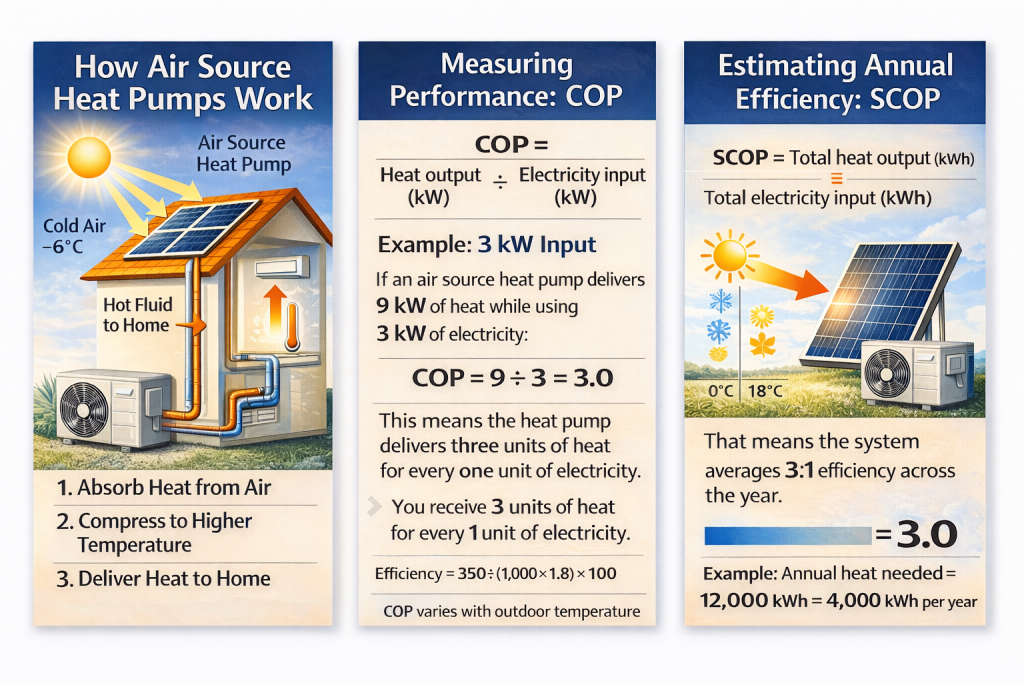
What Is an Air Source Heat Pump?
An air source heat pump is a heating system that moves heat rather than creating it. It works a bit like a fridge in reverse:
- A fridge takes heat from inside and releases it outside.
- An air source heat pump takes heat from outside and releases it inside.
Most systems include:
- An outdoor unit with a fan and heat collector
- A compressor that raises the temperature
- Pipes filled with a special fluid
- An indoor unit that sends heat to radiators, underfloor heating, or hot water
- A control system to manage temperature and timing
Together, these parts move heat from the air into your home.
How Heat Is Collected and Used
1. Heat Is Taken from the Air
First, the outdoor unit draws in air using a fan. Even on cold days, the air still contains heat. The system absorbs this heat into a special fluid.
2. The Heat Is Boosted
Next, the compressor squeezes this warm fluid. As the fluid is compressed, its temperature rises.
3. Heat Moves Indoors
Then, the hot fluid flows into the indoor unit. Here, it releases heat into the home’s heating system.
4. Rooms and Water Warm Up
After that, the heat travels through radiators, underfloor pipes, or a hot water tank, warming the home and providing hot water.
5. The Cycle Repeats
Finally, once the fluid cools, it returns outside to collect more heat. The process then repeats again and again.
Main Parts
Outdoor Unit
First, this unit pulls in air and gathers heat.
Compressor
Next, the compressor raises the temperature of the collected heat.
Pipes and Fluid
Then, these carry heat around the system.
Indoor Unit
After that, this unit sends heat into radiators, floors, or water tanks.
Control System
At the same time, controls manage when and how the system runs.
From Air to Home
Heat moves from the outdoor air into the system, then into the building. Although the pump uses electricity, it produces far more heat than the power it consumes. For example, one unit of electricity can often deliver three or more units of heat.
Because of this, air source heat pumps offer an efficient way to heat homes and cut energy use.
Why Air Source Heat Pumps Matter
Air source heat pumps provide heating without:
- Burning gas or oil
- Releasing carbon dioxide at the home
- Creating smoke or fumes
In addition, they work all year round and pair well with renewable electricity. As a result, they help reduce carbon emissions and lower energy bills over time.
In Short
Air source heat pumps:
- First, collect heat from the air.
- Next, boost that heat using a compressor.
- Then, move the heat indoors.
- Finally, warm rooms and water.
In the end, this simple cycle delivers clean, efficient heating for modern homes.