How Solar Thermal Works
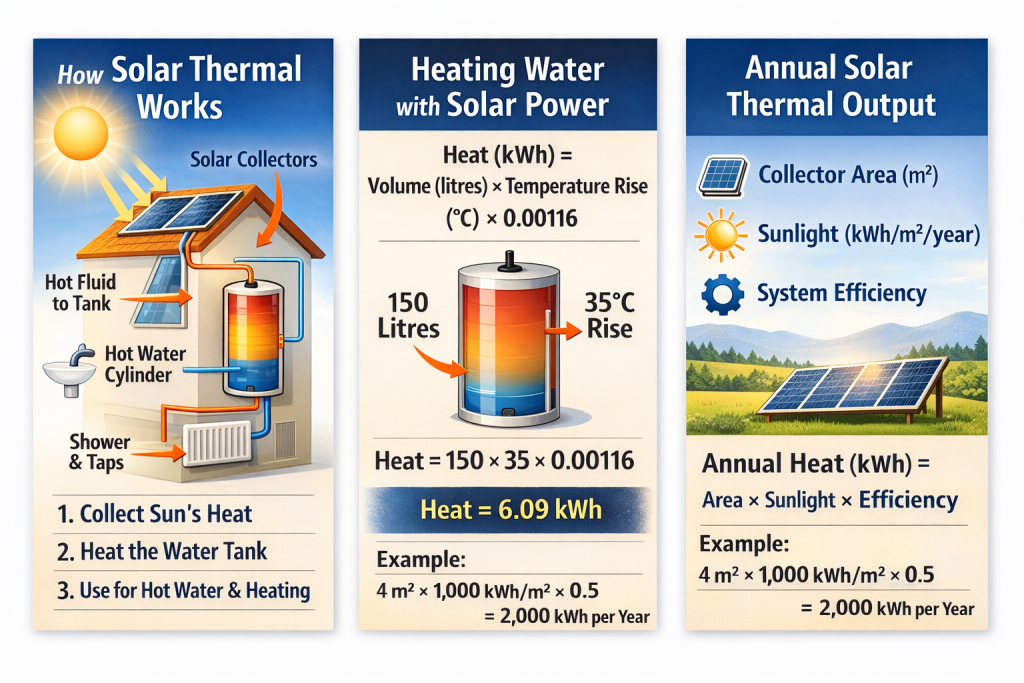
Solar thermal systems use sunlight to heat water. Instead of making electricity, they capture the sun’s warmth and use it to provide hot water for homes and buildings.
They work quietly, without burning fuel or creating pollution. As a result, solar thermal plays a useful role in low-carbon heating, especially for everyday hot water.
In simple terms:
first the system captures heat from the sun, then it moves that heat into a tank, and finally it supplies hot water for use.
What Is a Solar Thermal System?
A solar thermal system uses special panels, called collectors, to absorb heat from sunlight. It then transfers this heat into a hot water cylinder.
Most systems include:
- Solar collectors on the roof
- A heat-carrying fluid inside the collectors
- Pipes to move the fluid
- A hot water tank with a heat coil
- A control unit and pump to move heat around
Together, these parts move heat from the sun into your water supply.
How Heat Is Collected and Used
1. Sunlight Warms the Collectors
First, sunlight hits the roof-mounted collectors. Their dark surfaces absorb heat and warm the fluid inside.
2. Warm Fluid Starts to Flow
Next, a small pump moves the warm fluid through pipes from the roof down to the hot water tank.
3. Heat Transfers to Water
Then, the fluid passes through a coil inside the tank. As it flows, it gives up its heat to the stored water.
4. Hot Water Builds Up
After that, the water in the tank grows hotter and stays ready for taps, showers, and sinks.
5. The Cycle Repeats
Finally, once the fluid cools, it returns to the roof to collect more heat. The cycle repeats whenever the sun shines.
Main Parts
Solar Collectors
First, these capture heat from sunlight.
Heat-Carrying Fluid
Next, this fluid absorbs heat and carries it through the system.
Pipes and Pump
Then, these move the warm fluid between the roof and the tank.
Hot Water Tank
After that, this stores heated water for daily use.
Control System
At the same time, controls manage flow and protect the system.
From Sun to Tap
Heat travels from the collectors to the tank, where it warms stored water. You then draw this hot water from taps and showers just like any other supply.
On sunny days, the system can provide most or all of a home’s hot water. When sunlight is low, a boiler or immersion heater can top it up.
Why Solar Thermal Matters
Solar thermal systems provide hot water without:
- Burning gas or oil
- Releasing carbon dioxide at the home
- Creating smoke or fumes
In addition, they reduce energy bills and work well alongside other low-carbon systems, such as heat pumps. As a result, they help cut carbon emissions over time.
In Short
Solar thermal systems:
- First, capture heat from the sun.
- Next, move that heat through fluid-filled pipes.
- Then, transfer the heat into a water tank.
- Finally, supply hot water for everyday use.
In the end, this simple process turns sunlight into clean, reliable heat for homes.